Why Dock Plans are Important
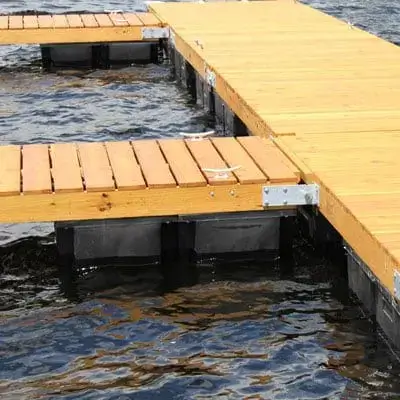
Start with your lake bottom
The right dock plan depends on what’s under your water and how much that water moves through the season.
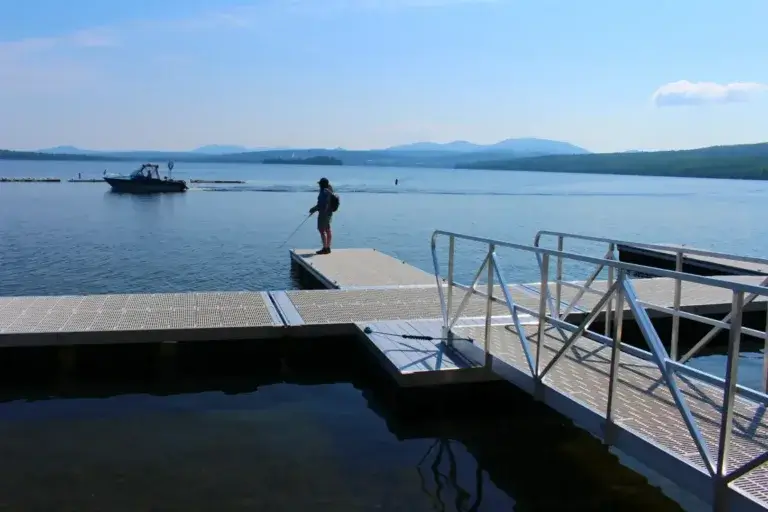
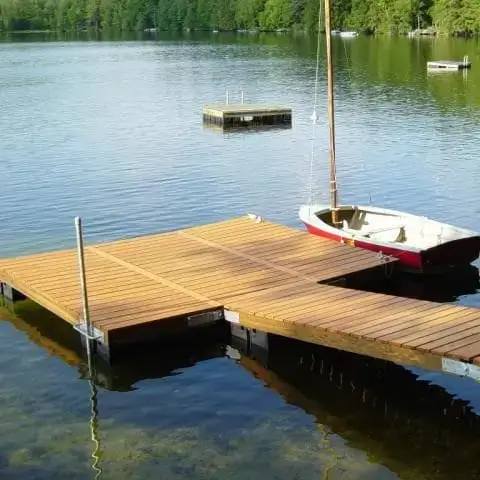
Deep, rocky, or soft bottom? Consider our floating dock plans.
Floating docks work well in deeper water, especially over 8 feet, where pipe legs or posts are hard to drive. They’re also a good option when the bottom is soft, rocky, uneven, or unreliable. In regularly windy or rough conditions, we may recommend another setup.
Firm, shallow bottom? Build to our stationary dock plans.
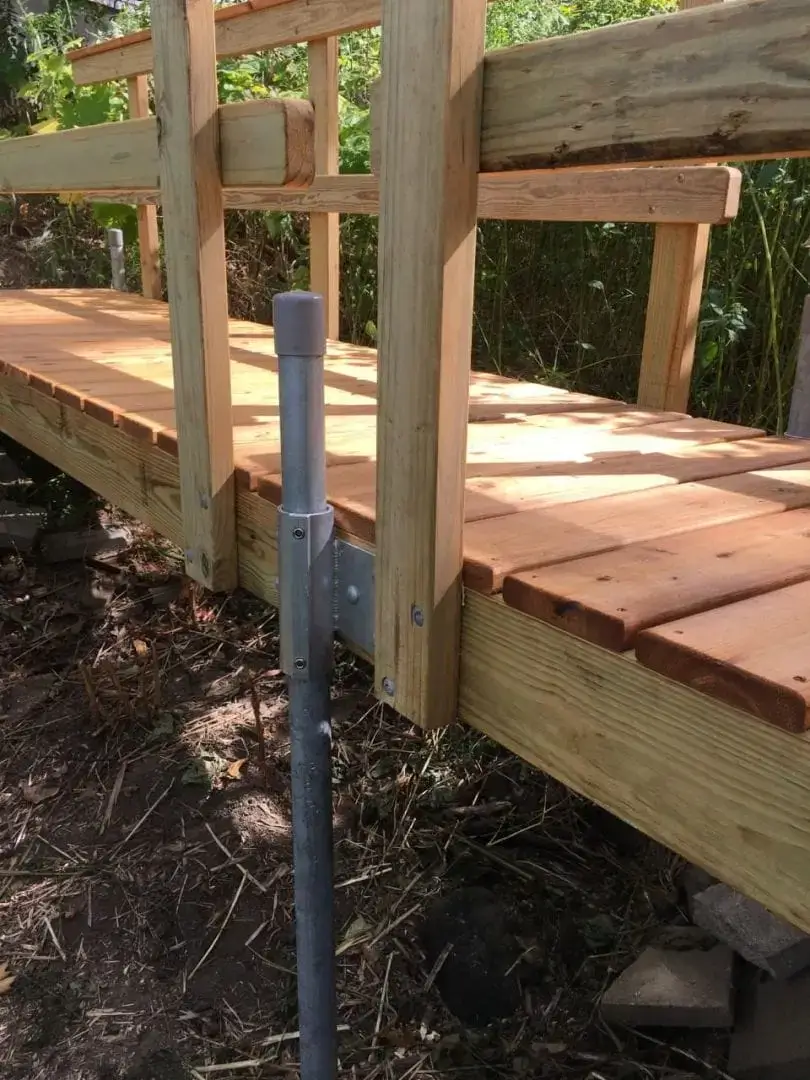
If you’ve got a hard bottom and reliable depth all season, a stationary dock stands on pipe legs driven into the lake bottom. Solid, level, doesn’t move underfoot. The right fit for shallow coves and lakes with firm substrates..
Not sure which one your shoreline calls for?
Read our Floating vs. Fixed Docks guide, or call +1 (207) 693-3770 and ask for Gretta.
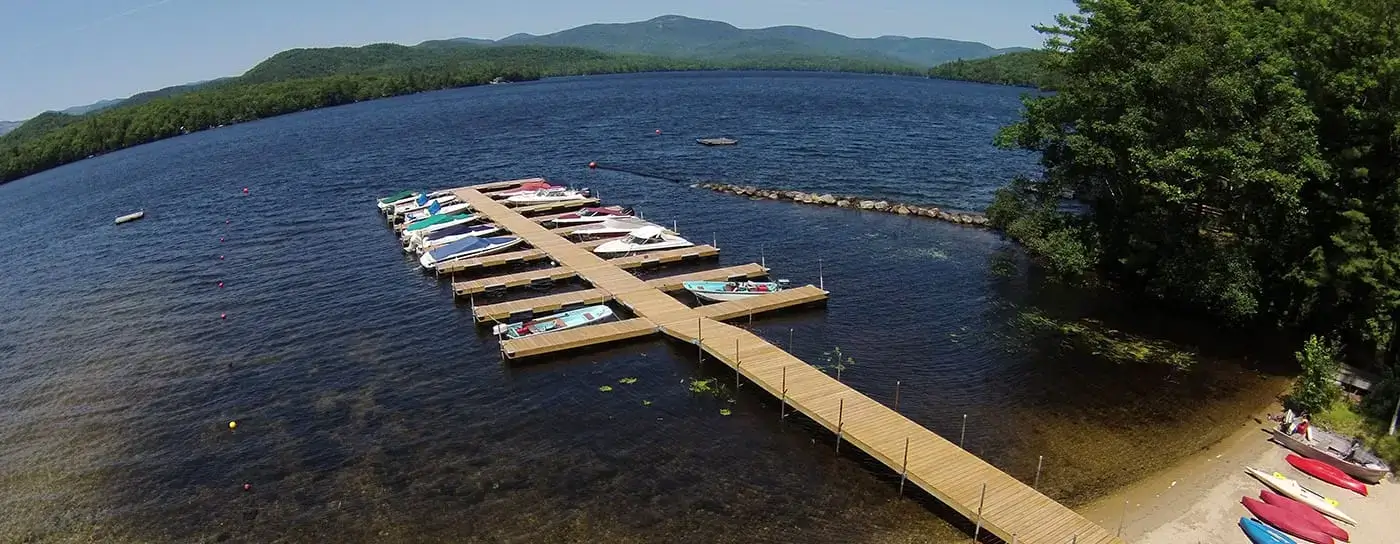
What comes with our dock plans
Every set of plans is a complete build document: dimensioned drawings, a full materials list, hardware specifications, and a step-by-step build sequence in the order we’d do it ourselves. Standard tools, no guesswork. Hit a question halfway through?
- Dimensioned drawings: Every measurement you need, laid out to scale.
- Materials and hardware list: Exactly what to buy and the specs to match, so you can source locally or order from us.
- Step-by-step sequence: The build order we follow, so you’re not undoing work later.
Do I need foam-filled or air-filled floats?
This is the question most floating-dock builders get stuck on –luckily, we have the answers.
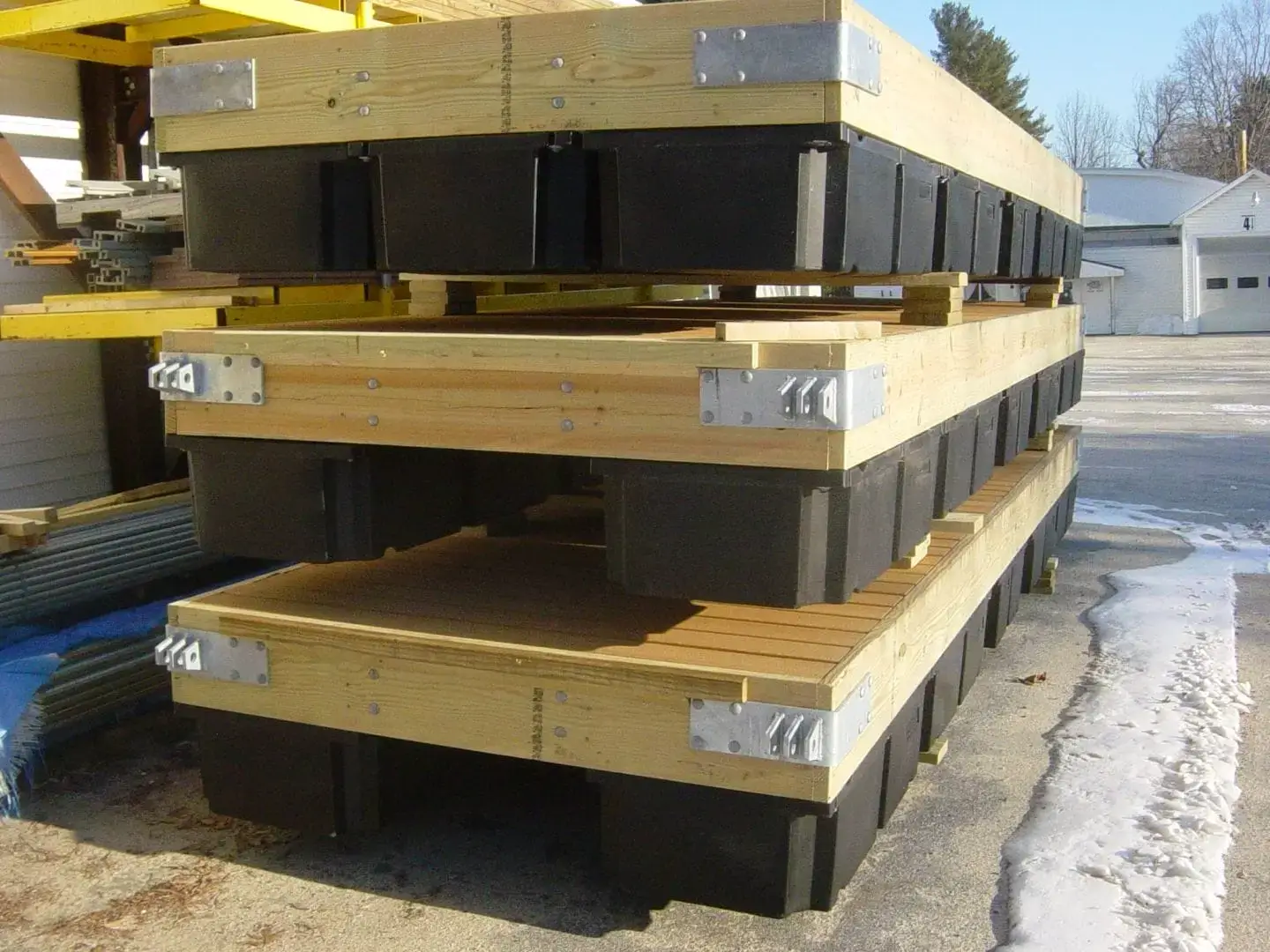
Foam-filled floats sit a little lower in the water than air-filled floats, but they don’t fail when something punctures them. Most DIY builders we see on high-activity lakes choose foam-filled for exactly that reason.
Air-filled floats give you more buoyancy for less money, which makes sense in a calmer cove with light boat traffic. Both work. It’s a tradeoff, not a right answer.
A DIY dock plan is only as good as the hardware
A dock fails at its connections, not in the middle of a board. Our plans call out standard hardware you can source locally, and note where a Great Northern part makes the build tighter. We stock those if you’d rather get everything from one place.
Galvanized vs. aluminum hardware: Galvanized steel is stronger for the price and the right call for most freshwater builds. Aluminum won’t rust at all and shaves weight if you pull the dock each season.
When cross bracing matters: Longer spans and exposed, windy shorelines need it. Short runs in a protected cove often don’t. Your plan tells you which.
Need hardware? Shop the parts: 4×4 post brackets, floating dock hardware, dock tools
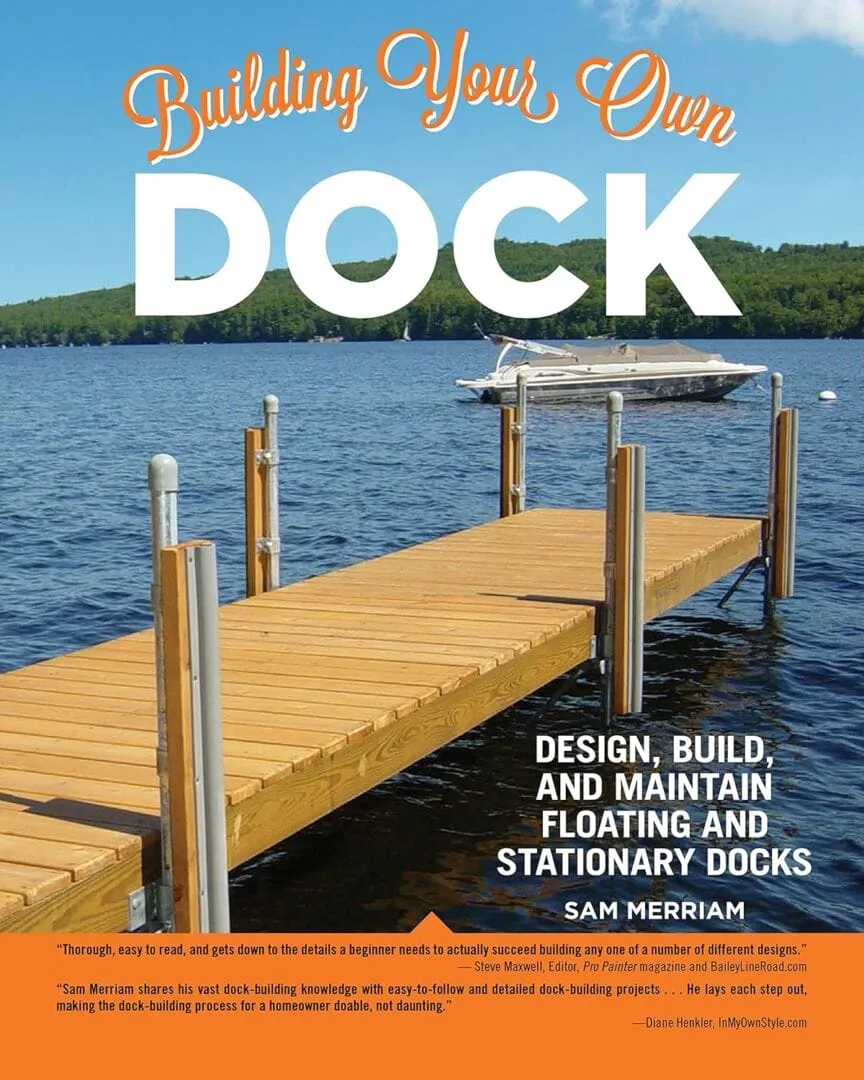
The book on building your own dock
Sam Merriam wrote it. Seth Merriam illustrated it. Building Your Own Dock covers everything you need to know about designing, building, and maintaining a floating or stationary dock system, start to finish. Every piece of hardware in it is available on this site. Forty-seven years of building docks in Naples, Maine, and it’s all in one place.
Frequently asked questions
How do I get a Great Northern Docks DIY dock plan?
Purchase any plan directly from this page. Once your order is complete, you’ll get a download link in your inbox. Print it, mark it up, bring it to the shoreline.
How difficult is it to build your own dock?
It depends on your experience. First-time DIYers will find it a real project. If you’ve framed a deck, built a fence, or done remodels, it’s fairly straightforward. Either way, the plans walk you through it step by step, and we’re a phone call away if something doesn’t add up.
Do these plans work outside Maine?
Yes, we test them in Maine conditions, which are about as demanding as freshwater gets. Build to them anywhere and you’re building to a high standard.
Can I buy just the hardware?
Yes. If you already have a design, you can buy Great Northern brackets, floats, and fasteners on their own. Start with dock parts for fixed legs or floating dock hardware.
How do I anchor a floating dock?
Most builders use pipe legs in shallow water and anchors or chains in deeper sections. The floating dock plans walk through the anchoring options for your depth and bottom type.
How deep can a stationary dock go?
With proper bracing and legs driven into the bottom, stationary docks can handle water depths up to eight feet. Past that, or where the bottom is soft or rocky, a floating dock is the better call.
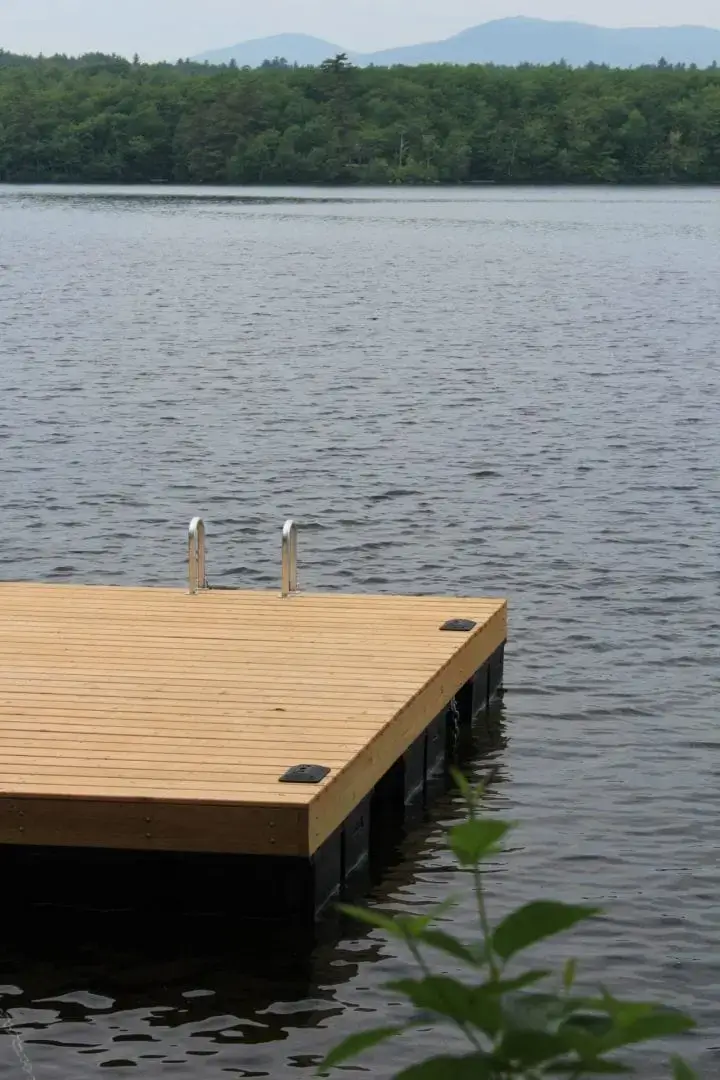
Build yourself or get a quote from us
Ready to start? Buy the plans and the parts, and you’ll have everything you need to do it right the first time. Want to skip the build? We’ll quote a hand-built aluminum dock for your shoreline instead.Forty-seven years of building docks in Naples, Maine, and it’s all in one place.