Choosing a dock for your lake
Start with your lake bottom
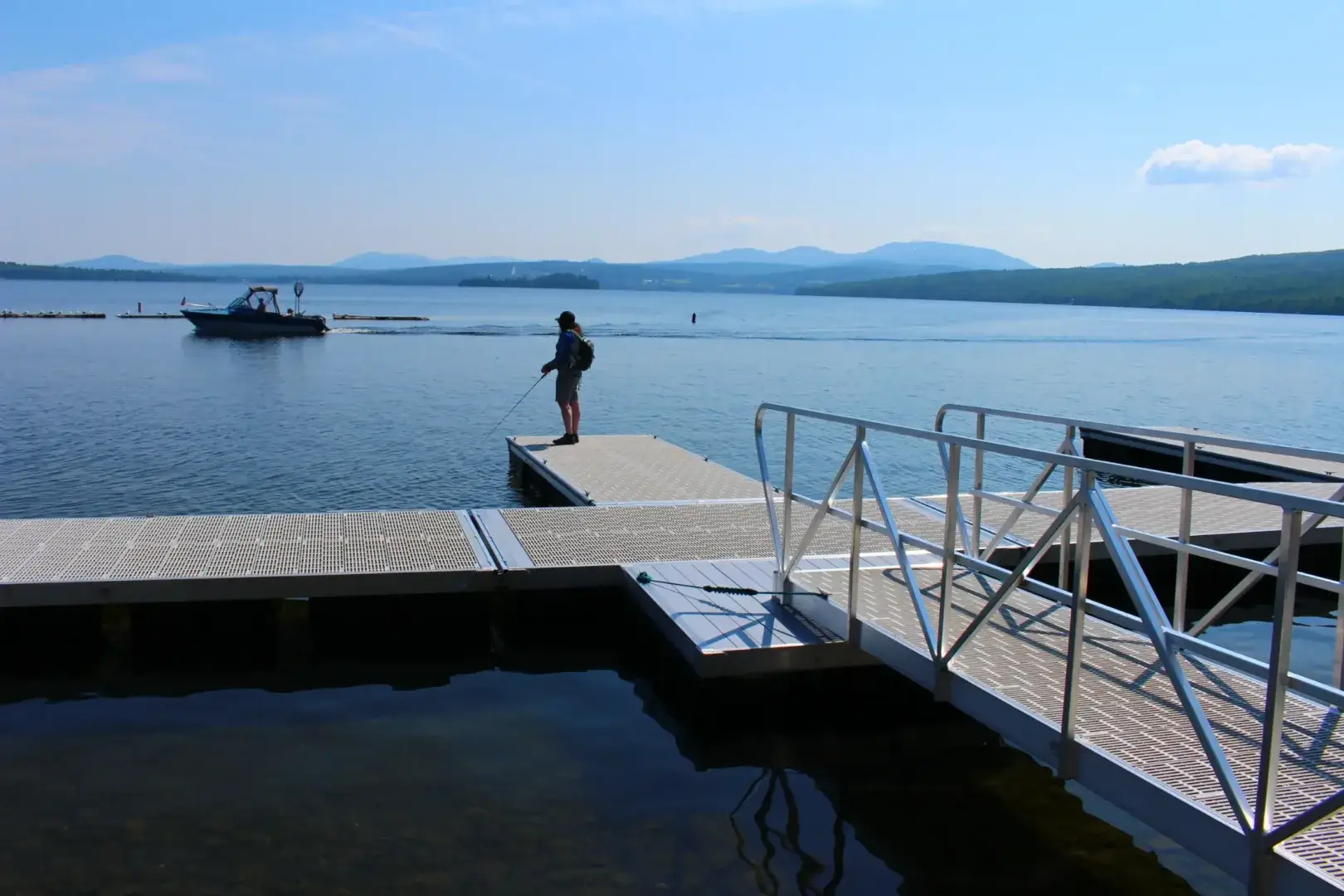
Firm bottom, reliable depth all season? A fixed dock on legs is usually the right call. Solid, doesn’t move, and on most Maine lakes with hard bottoms it’ll outlast the owner.
If the water is extremely rough they should call us or fill out our contact form to determine the best route to take.
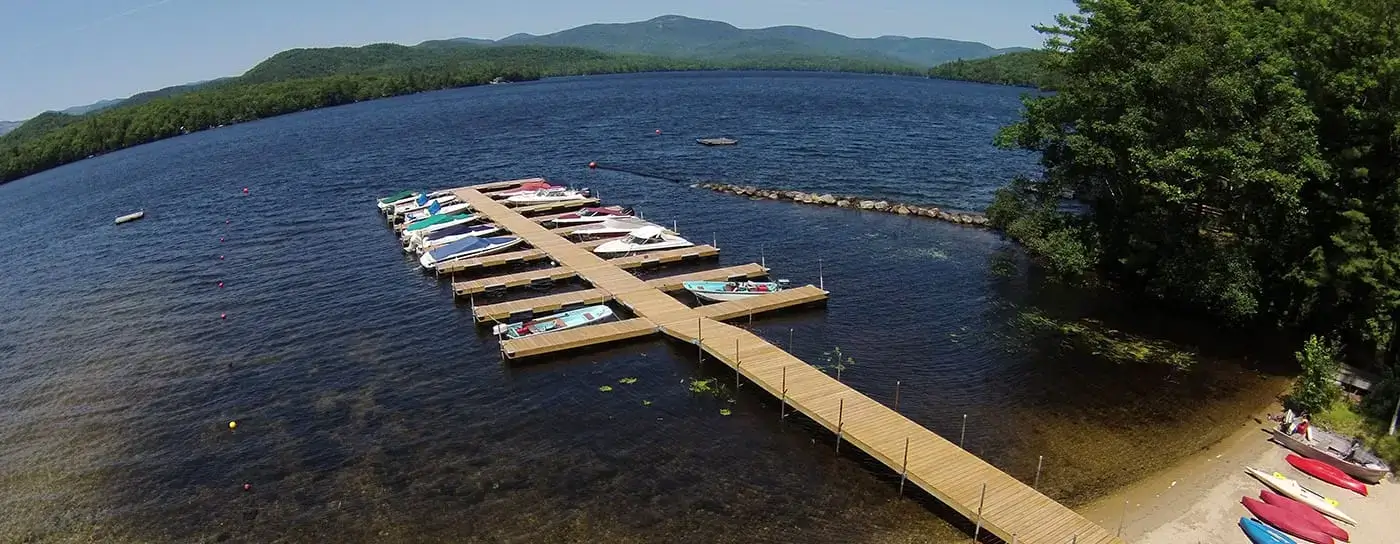
Stationary docks, built to last
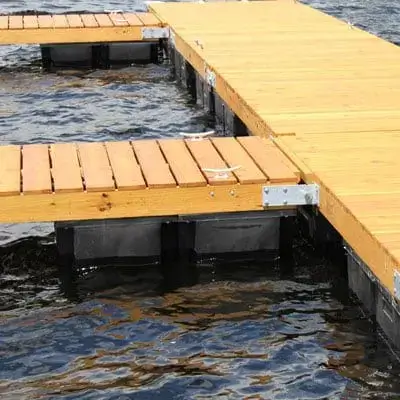
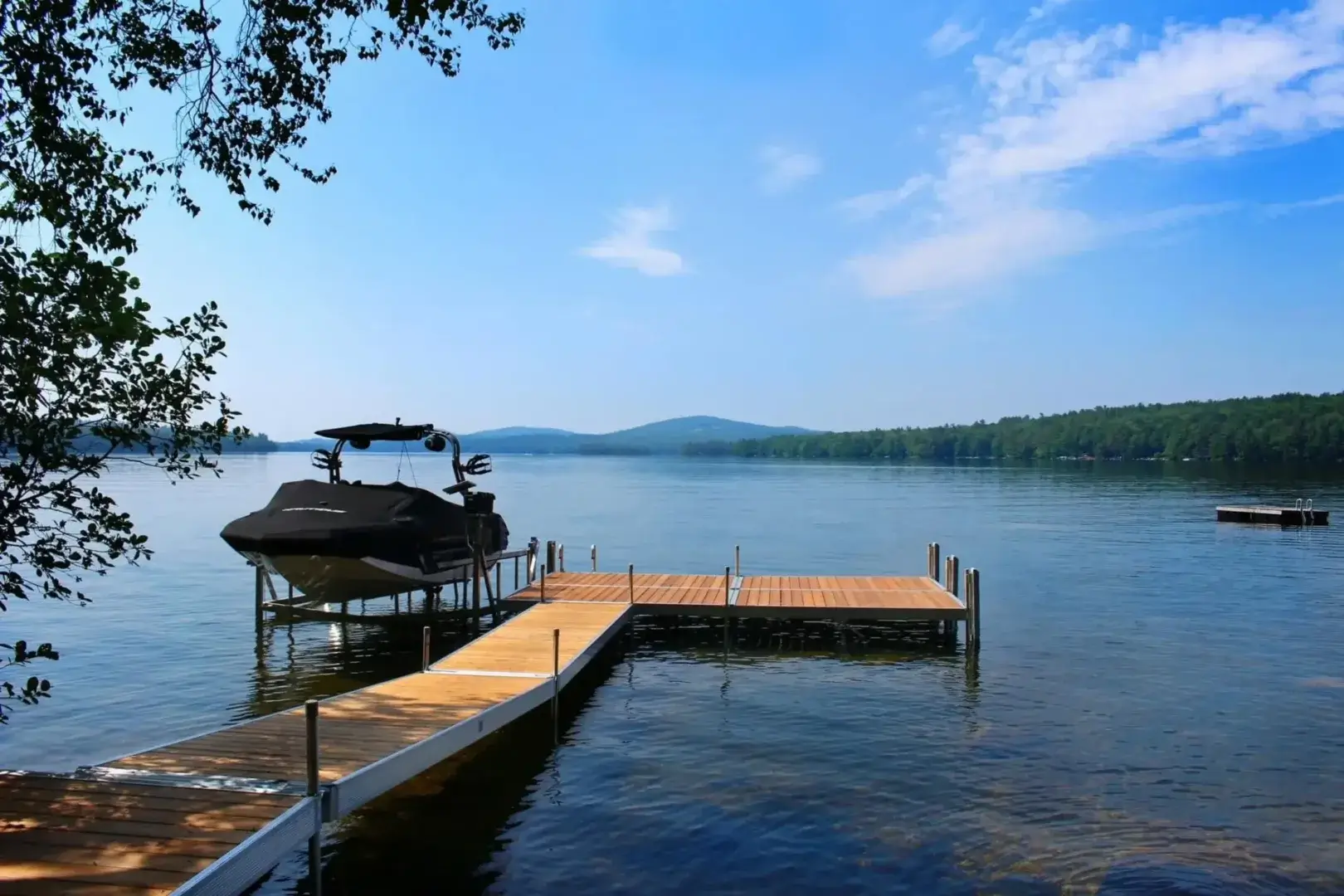
A fixed dock, or stationary dock, stands on pipe legs driven into the lake bottom. Once it’s set, it doesn’t move. You get a stable, level platform that feels like an extension of your yard, which matters when kids are running on it or grandparents are walking out to the chairs at the end of the day.
Fixed docks perform best where the bottom is firm enough to take a leg and the water depth stays reliable all season. On rough, exposed water, a stationary system outperforms floating. Most Sebago Lake properties use stationary docks for exactly that reason. The wave action and exposure make a floating system impractical. Owners in protected coves on the same lake sometimes go floating, but out on open water, stationary wins.
Where they struggle: rocky bottoms you can’t drive a leg into, soft mud that won’t hold, and water that drops several feet by late summer.
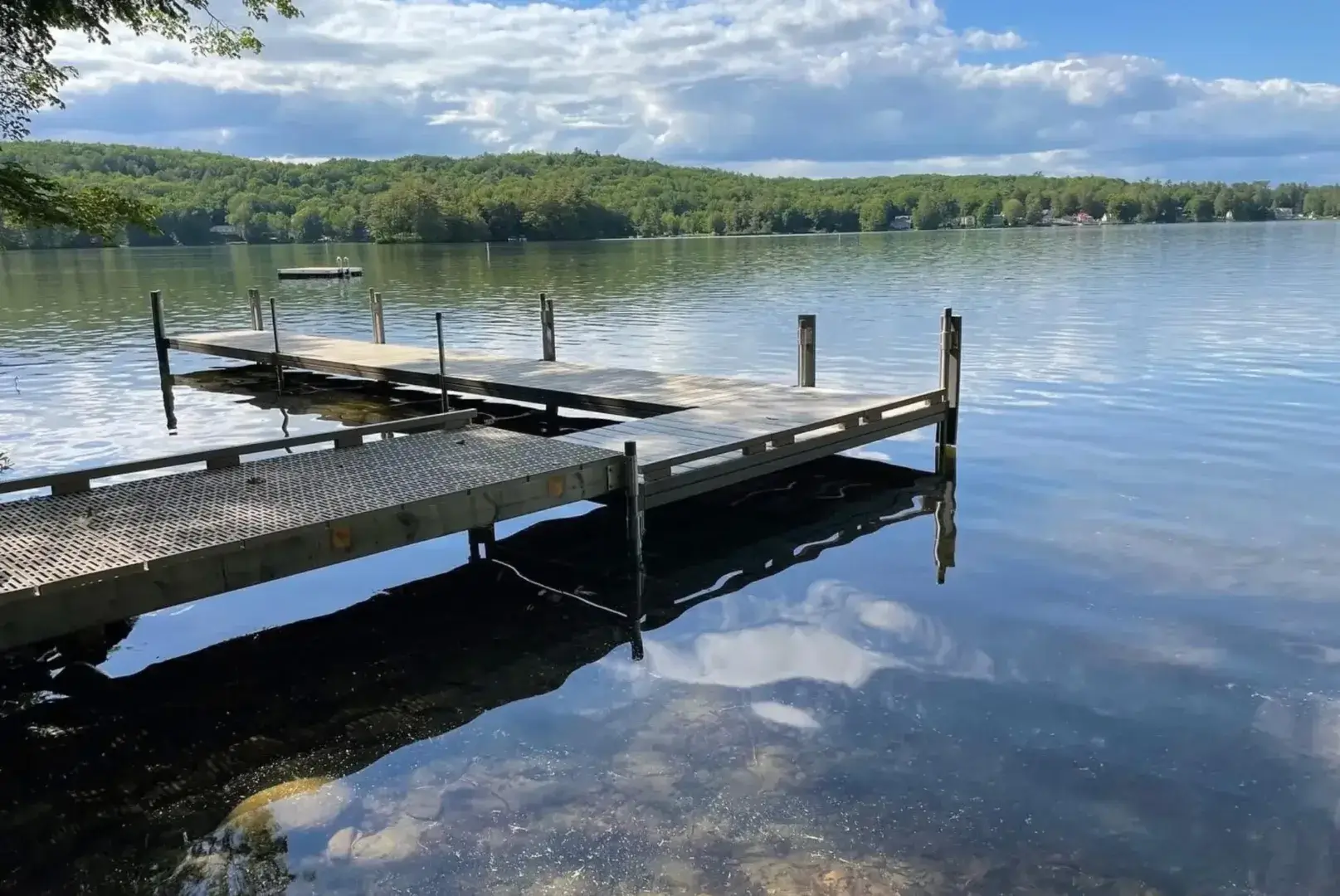
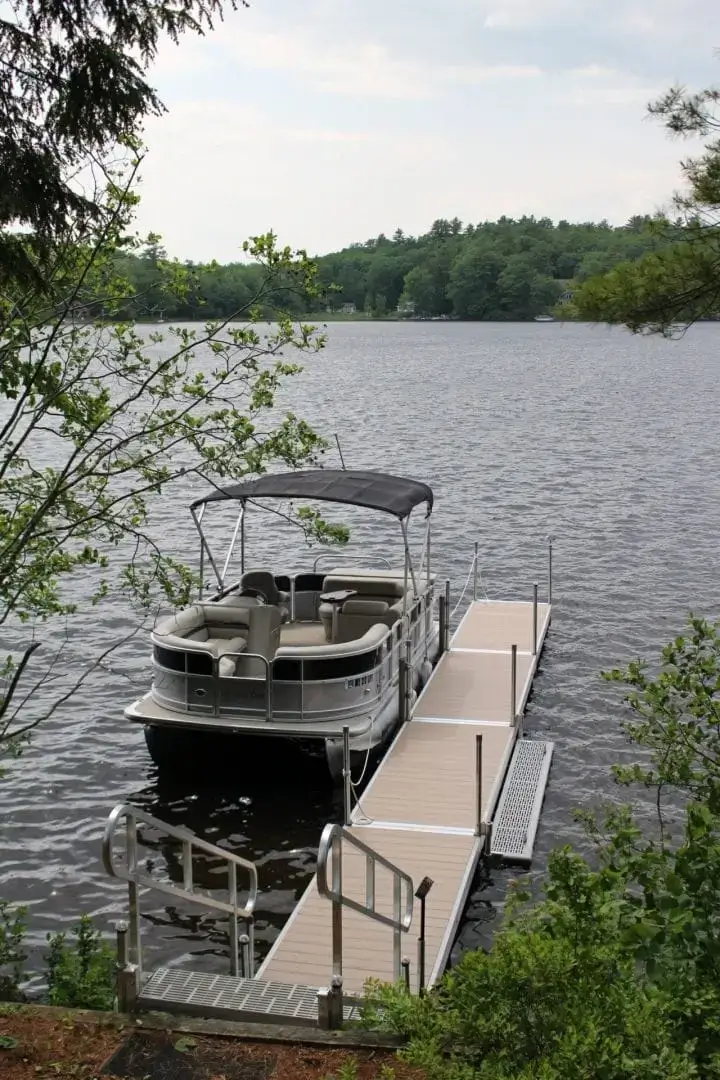
Floating docks, built to ride the water
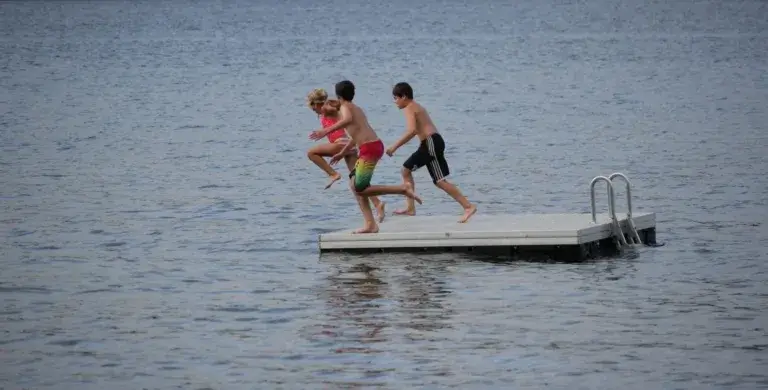
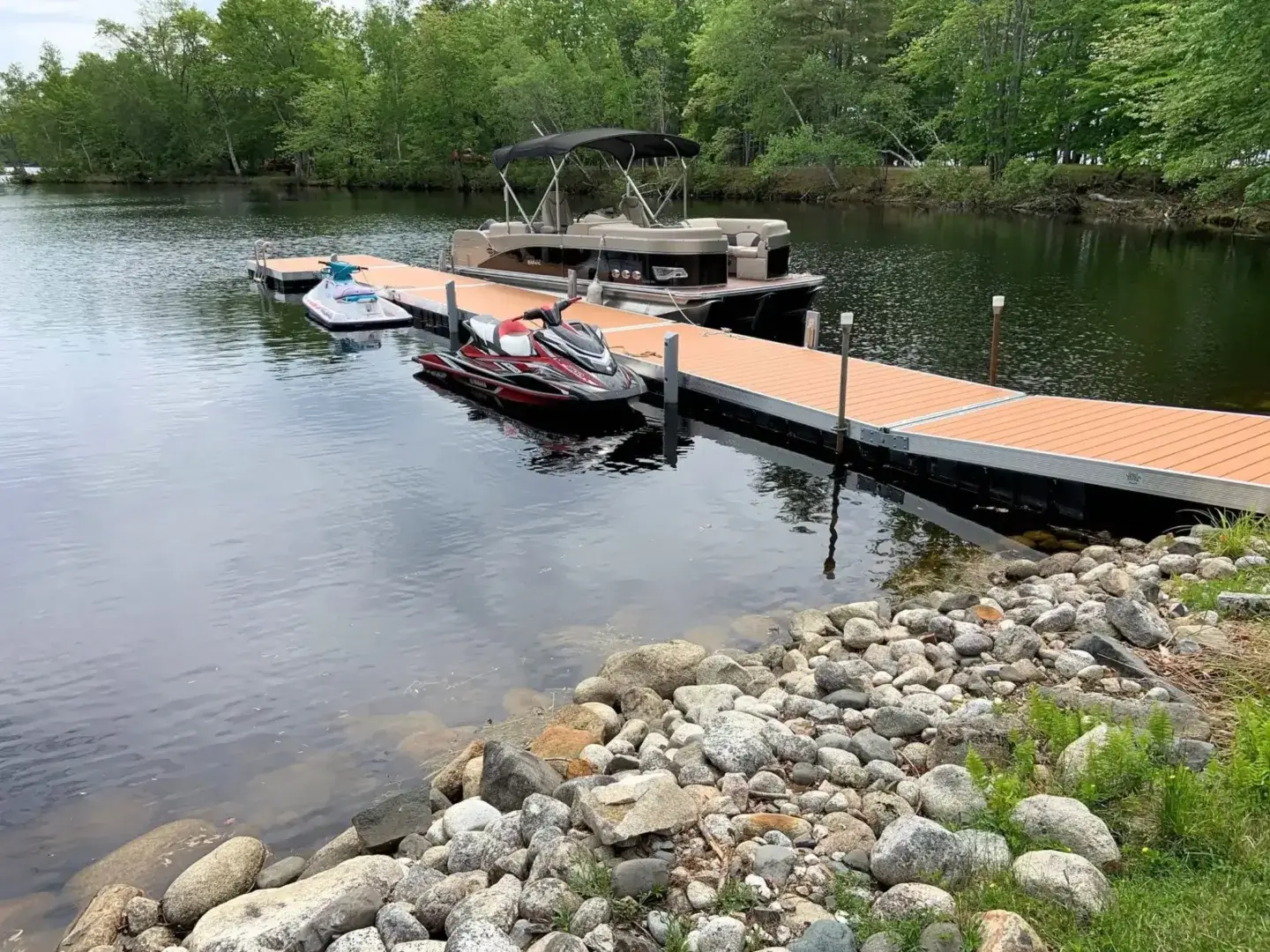
A floating dock sits on the surface and rises and falls with the water. That’s exactly what you want when your lake level and shoreline changes through the season or when the bottom is rocky or soft.
Floating docks also reach into deeper water, where driving a leg isn’t practical. On the bigger, deeper Maine lakes, like Moosehead or Sebago, that’s often the only way to get real depth at the end of your dock.
Keep in mind, a floating dock has a little give underfoot, and it needs the right anchoring for your depth and exposure. That’s where our team earns its keep.
The differences that actually matter
| Stationary dock | Floating dock | |
|---|---|---|
| Best bottom type | Firm, shallow | Rocky, soft, or deep |
| Water-level changes | Needs steady depth | Handles tidal swings |
| Feel underfoot | Solid and still | Slight, natural give |
| Reach into deep water | Limited by leg length | Goes where legs can’t |
| Seasonally install/removal | Multi-step process | Quick and easy |
What about a roller dock?
If your main concern is getting the dock in and out easily each season, a roller dock is worth a look. It rolls out to shore on wheels and rolls back in before winter, which makes it a favorite for shallower shorelines and owners who handle setup themselves. See roller docks.
The best way to decide is to show us your water
You can read about this all day, but the real answer is in your bottom conditions and your depth. Our team surveys hundreds of Maine waterfronts every year, from Sebago to Winnipesaukee. Send us your shoreline and we’ll tell you what we’d put there and why.
Frequently asked questions
Which dock lasts longer, floating or fixed?
Both last decades when they’re built right and matched to the shoreline. A fixed dock in the wrong spot fails faster than a floating dock in the right one, and the reverse is just as true. Fit matters more than type.
Can I combine a stationary dock with a floating dock?
Yes, and it’s a common setup on Maine lakes. A stationary section works well coming off the shore where the water is shallow and the bottom is firm. Further out, where the water gets too deep for pipe legs or the depth changes with the season, a floating section takes over. A ramp connects the two. You get the stability of a fixed dock at the entry point and the adaptability of a floating dock where you need it. If your shoreline transitions from shallow to deep, or you’re dealing with water level changes further out, this hybrid setup is worth considering. Call us and we’ll look at your shoreline with you.
Can I switch from one to the other later?
Often, yes, though it usually means new hardware and sometimes a new frame. It’s cheaper to get it right the first time, which is why the site survey matters. Call us before you commit.
What’s the difference between Feather-LITE and Dura-LITE?
Feather-LITE is the lighter system, built for smaller lakes and lighter watercraft. Dura-LITE is the heavier, more rugged system, available as both a stationary and floating dock, and built for longer spans, exposed shorelines, and deeper water. Not sure which fits your lake? That’s a five-minute call with our team.
How deep can a stationary dock go?
With proper bracing and legs driven into the bottom, stationary docks can handle water depths up to eight feet. Past that, or where the bottom is soft or rocky, a floating dock is the better call.
Let’s figure out the right dock for your lake
Our team surveys hundreds of Maine waterfronts every year. Tell us about yours and we’ll tell you exactly what we’d build there, and why.